
ASTM A554 is one of the most commonly referenced specifications when buyers source welded stainless steel mechanical tubing for products, fabrication and architectural applications.
But writing only “ASTM A554” on an RFQ is not a complete tube specification.
A buyer still needs to define the stainless steel grade, tube profile, dimensions, wall thickness, surface finish, length, tolerances and any downstream processing or inspection requirements that affect the finished component.
This guide explains what ASTM A554 covers and, more importantly, what manufacturers, fabricators and procurement teams should specify when requesting stainless steel tubing for an actual production project.
What Is ASTM A554 Stainless Steel Tubing?
ASTM A554 is the Standard Specification for Welded Stainless Steel Mechanical Tubing.
The current ASTM A554 specification covers welded stainless steel mechanical tubing intended for ornamental, structural, exhaust and other applications where appearance, mechanical properties or corrosion resistance is needed. It includes multiple stainless steel families and recognizes tubing supplied in round, square, rectangular and special shapes.
For buyers, the important point is this: ASTM A554 defines a specification framework. It does not replace the purchasing information required for a particular product.
ASTM A554 Is Not a Complete RFQ by Itself
Consider an RFQ that says: ASTM A554 stainless steel tube, 10,000 pieces.
There is not enough information to establish the actual manufacturing requirement. The supplier still needs to know the material grade, profile, dimensions, wall thickness, finished length, surface finish, critical tolerances, downstream processing, inspection requirements and packaging needs.
This is why the standard and the purchasing specification should be considered together. For a complete purchasing-information checklist, see the Stainless Steel Tube RFQ Checklist.
1. Specify the Stainless Steel Grade
The required material grade should be stated clearly in the RFQ or drawing.
- 201
- 304
- 316L
Grade selection should be based on the actual product environment and project requirements rather than assuming that one grade is universally better.
For example, 304 is widely considered for many general manufacturing and indoor applications. Where chloride exposure, coastal conditions or other more demanding corrosion environments are relevant, 316L may require closer consideration.
If the customer drawing already specifies a material grade, that requirement should remain authoritative for the project. For a detailed buyer-oriented comparison, see 304 vs 316L Stainless Steel Tubes.
2. Define the Tube Profile
ASTM A554 recognizes round, square, rectangular and special-shaped tubing. The RFQ should therefore identify the required profile rather than simply asking for “stainless steel tube.”
- round stainless steel tube
- square stainless steel tube
- rectangular stainless steel tube
- oval stainless steel tube
- project-specific special-shaped tube
For special shapes, a drawing or approved sample becomes much more important because the geometry cannot always be communicated accurately through a simple width and height description.
Buyers can review the main profile families on the Products page.
3. Specify the Critical Dimensions
The dimensional specification depends on the tube profile. For round tubing, this commonly begins with outside diameter and wall thickness. For square and rectangular tubing, buyers normally need to identify width, height, wall thickness and relevant profile requirements. Special-shaped tubes may require a detailed cross-sectional drawing.
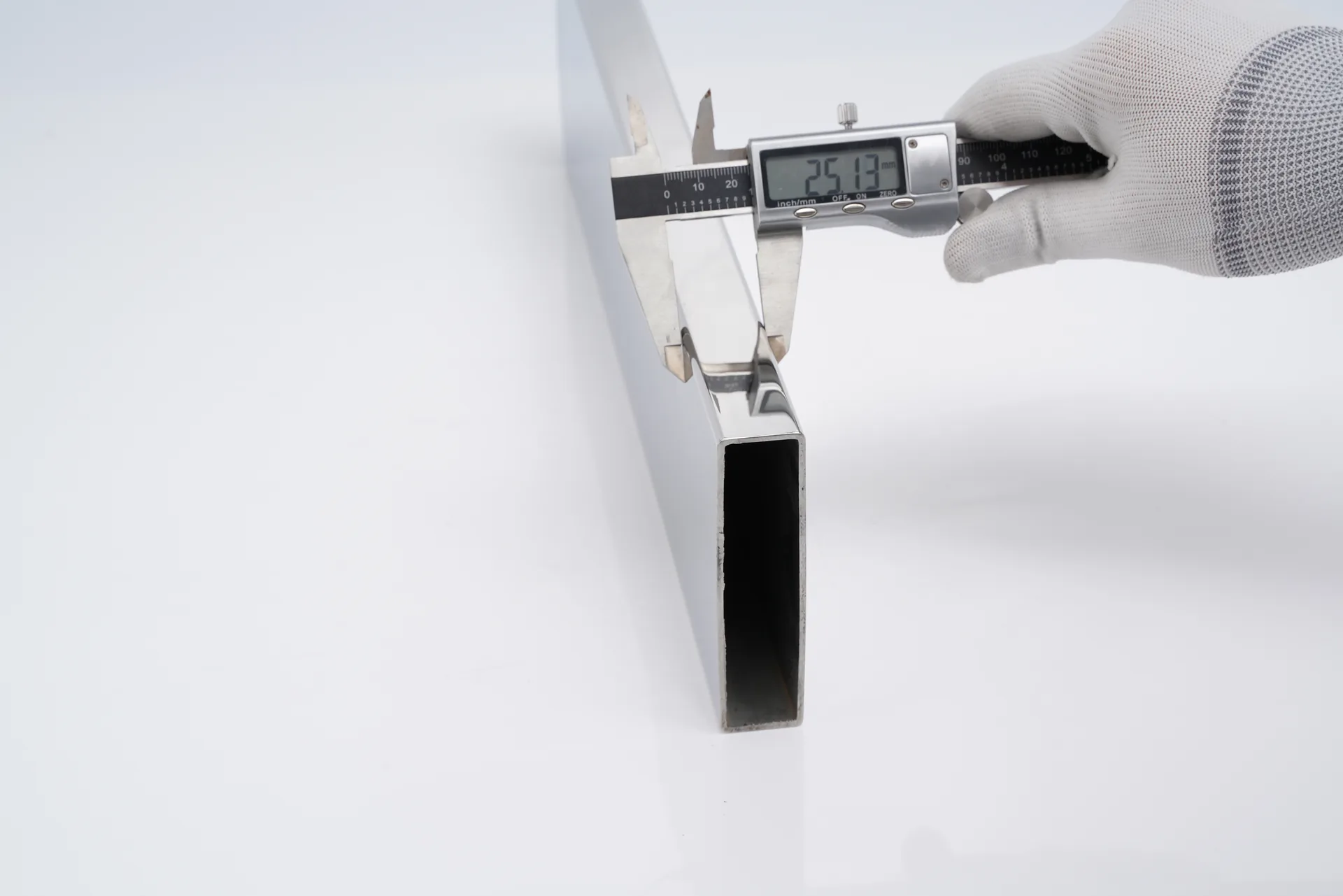
The key purchasing question is: Which dimensions determine whether the tube will work in the finished assembly?
A dimension controlling insertion into another component may be more functionally important than a non-critical external dimension. For components entering welded frames, furniture systems, bathroom products, railings or machinery, the drawing should identify the dimensions and interfaces that actually control fit.
4. State the Wall Thickness
Wall thickness can affect forming behavior, welding, bending, component weight, stiffness, downstream processing and assembly performance.
It should therefore be included explicitly in the RFQ. Avoid assuming that a supplier will select wall thickness based only on tube diameter or profile.
Where the wall thickness is defined by a customer drawing, engineering requirement or finished-product design, provide the specified value and relevant acceptance requirement.
5. Define the Required Length
Tube length should also be stated clearly. Some projects purchase standard production lengths and perform secondary cutting later. Others require tubes supplied at a specific finished length.
If cut-to-length supply is required, buyers should also consider the required end condition and what happens to the tube afterward, such as welding, bending, insertion, machining, drilling, end forming or assembly.
For more detail, see Cut-to-Length Stainless Steel Tubes: End Quality and Assembly Fit.
6. Specify the Surface Finish
For many ASTM A554 applications, surface appearance is part of the purchasing requirement. This is especially relevant for tubes used in furniture, bathroom hardware, handrails and railings, architectural metalwork, decorative frames, visible machinery components and commercial interiors.
- bright finish
- brushed finish
- satin appearance
- polished finish
- mirror-polished appearance
- approved reference sample
- visible-face requirement
- project-specific finish requirement
A buyer should avoid vague descriptions such as “good surface” or “high-quality polish.” The required surface condition should also be considered together with packaging and downstream fabrication.
For more information, see Polished & Brushed Stainless Steel Tube Surface Protection.
7. Do Not Assume One Universal Tolerance
One important purchasing mistake is treating “ASTM A554” as if it automatically defines every tolerance required by the finished product.
The actual project may have dimensions controlling insertion, welding position, connector fit, alignment, bending, hole position, assembly or visible geometry.
Where the drawing defines a tolerance, include it in the RFQ. Where it does not, explain the functional requirement before asking for unusually tight control.
Vertex Tubes does not establish one universal public tolerance commitment for every order. Final dimensional and length requirements should be reviewed according to the tube specification, drawing and application.
8. Tell the Supplier What Happens After Tube Production
A mechanical tube rarely exists in isolation. It may later be cut, bent, welded, drilled, punched, flared, reduced, flattened, polished, inserted or assembled.
That information matters during specification review. A tube intended for bending may require attention to profile geometry and wall thickness. A tube intended for welding into an assembly may require different consideration of cut condition, fit and dimensional relationships. A visible component may require more attention to surface appearance and protection.
This is why Vertex Tubes approaches product requirements around manufacturing fit, appearance and assembly fit, rather than treating every tube only as a commodity size.
9. Consider Welding and Distortion Before Assembly
When stainless steel tubes become part of welded products, the final geometry is influenced by more than the original tube dimensions.
Joint design, welding sequence, heat input, fixture strategy, component geometry and other fabrication conditions can influence distortion.
For a more detailed discussion, see Stainless Steel Tube Welding Distortion.
10. Define Inspection and Acceptance Requirements
If a project has specific acceptance requirements, communicate them before production.
- dimensions
- wall thickness
- length
- straightness
- profile consistency
- corner condition
- surface appearance
- weld seam condition
- cut-end condition
- project-specific requirements
Vertex Tubes may use dimensional inspection tools such as calipers where appropriate, while the final inspection method and acceptance requirement should follow the actual order and specification.
More information is available on the Quality page.
11. Include Secondary Processing in the RFQ
If the supplier is expected to perform secondary operations, include them when requesting the quotation.
- cut-to-length
- deburring
- chamfering
- bending
- flaring
- reducing
- flattening
- punching
- drilling
- end forming
- polishing

These capabilities remain subject to project review. The feasibility of a particular process depends on factors such as tube profile, dimensions, wall thickness, material, geometry and final requirement.
12. Packaging Is Part of the Specification
Packaging should not be treated only as a logistics issue. For visible stainless steel tubing, it can also be part of surface-quality control.
- surface protection
- bundling
- individual protection
- end protection
- labeling
- batch identification
- carton or crate requirements
- pallet requirements
- loading considerations

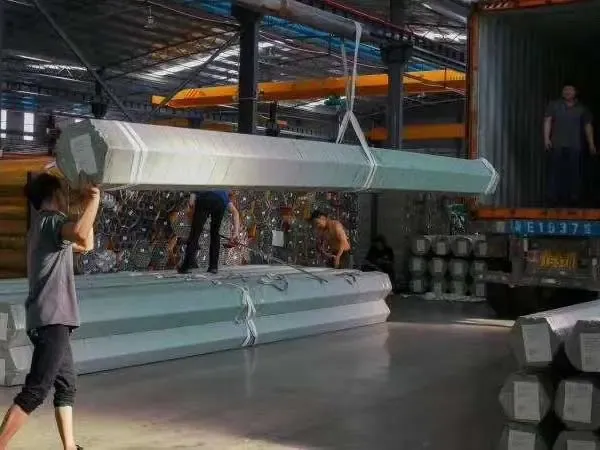
The packaging route should reflect the finish, geometry, transport method and downstream handling requirements of the product.
ASTM A554 Buyer Specification Checklist
| Requirement | What to Specify |
|---|---|
| Standard | ASTM A554 where applicable |
| Material | Required stainless steel grade |
| Profile | Round, square, rectangular, oval or special shape |
| Dimensions | OD / width / height / profile geometry |
| Wall thickness | Required value |
| Length | Standard or cut-to-length requirement |
| Surface | Required finish / visible-face requirement |
| Tolerances | Drawing and function-critical dimensions |
| Processing | Cutting, bending, drilling, forming, polishing, etc. |
| Downstream use | Welding, insertion, assembly or other fabrication |
| Inspection | Project-specific acceptance requirements |
| Packaging | Surface and transport protection |
| Quantity | Trial, production and repeat demand where known |
| Drawing | Recommended for custom or assembly-sensitive products |
ASTM A554 provides an important technical framework, but the information in this checklist turns that framework into a manufacturable purchasing requirement.
What Should You Send Vertex Tubes?
For an initial review, the most useful information is:
Standard + grade + profile + dimensions + wall thickness + length + finish + quantity + processing requirements + drawing.
Also tell us whether the tube will later be bent, welded, inserted, machined, assembled or used as a visible finished component.
Final dimensions, tolerances, processing requirements and acceptance criteria should be confirmed according to the specific project and drawing.