

Choosing between 304 and 316L stainless steel tubes is not simply a question of which grade is “better.” The right choice depends on where the finished product will be used, what it will be exposed to, how the tube will be fabricated, and what the buyer’s drawing or project specification requires.
For manufacturers, fabricators and architectural metalwork companies, grade selection should be made together with tube dimensions and profiles, surface finish, welding requirements, bending or forming operations, assembly interfaces and the final service environment.
In many indoor manufacturing applications, 304 is a practical and widely used choice. When chloride exposure, coastal conditions, aggressive cleaning environments or other corrosion risks become more important, 316L may deserve closer consideration.
The key is to specify the grade for the actual application, rather than treating 304 and 316L as interchangeable labels on an RFQ.
What Is the Practical Difference Between 304 and 316L Stainless Steel Tubes?
Both 304 and 316L are austenitic stainless steels commonly considered for fabricated products, visible components and corrosion-resistant applications.
The most important practical difference is that 316L contains molybdenum, which generally improves resistance to localized corrosion in chloride-containing environments compared with 304.
The “L” in 316L indicates a lower carbon version of the grade. This can be relevant when welding is part of the fabrication process because lower carbon content helps reduce the risk of sensitization associated with welding heat.
For a buyer, however, the practical question is not the chemistry alone.
The more useful question is:
What environment and fabrication sequence will the finished tube component experience?
A stainless steel tube used for indoor furniture and a tube used in a coastal railing system may have similar dimensions and surface finishes, but their service conditions can be very different.
When Is 304 Stainless Steel Tube Commonly Considered?
304 is widely used in manufacturing applications where general corrosion resistance, appearance, fabrication suitability and cost all need to be balanced.
Typical applications can include:
- furniture and decorative metal products
- indoor architectural components
- bathroom hardware where the specified environment supports its use
- machinery and equipment structures
- handles, frames and supports
- racks and workstations
- fabricated stainless steel components
The fact that 304 is widely used does not mean it is suitable for every indoor or outdoor application.
A buyer should still consider moisture, cleaning chemicals, contamination, exposure conditions and the required service life of the finished product.
Surface condition also matters. A polished or brushed appearance does not by itself determine corrosion performance. Fabrication, welding, grinding, contamination, cleaning and installation conditions can all affect the finished component; buyers can review related quality requirements with the grade and application.
When Should Buyers Consider 316L Stainless Steel Tube?
316L is often considered when the application has a higher corrosion-resistance requirement, particularly where chloride exposure may be relevant.
Examples may include projects exposed to:
- coastal environments
- salt-containing atmospheres
- certain wet environments
- more demanding exterior conditions
- cleaning or process environments where the project specification requires 316L
This does not mean that 316L removes all corrosion risk.
It also does not mean that every outdoor project automatically requires 316L.
A railing installed in a dry inland environment, for example, may present different conditions from a railing installed close to the sea. Likewise, two bathroom products may experience very different cleaning chemicals, ventilation and moisture cycles.
The grade should therefore be selected according to the complete project requirement rather than a simple “indoor versus outdoor” rule.
When Is 316L the More Relevant Option Than 304?
It depends on the application and service environment.
316L generally offers advantages in some more demanding corrosion environments, but “better” depends on what the product actually needs.
Using 316L where 304 already satisfies the project requirement can increase material cost without necessarily improving the commercial outcome.
On the other hand, choosing 304 only because it costs less can create unnecessary risk if the finished component will face conditions that justify 316L.
For procurement teams, the decision should balance:
environment → performance requirement → fabrication → specification → cost
rather than:
304 = cheap / 316L = premium
That distinction is especially important for OEM and repeat-production programs, where a grade decision may apply to thousands of finished components rather than a single tube.
304 vs 316L for Handrails and Railings
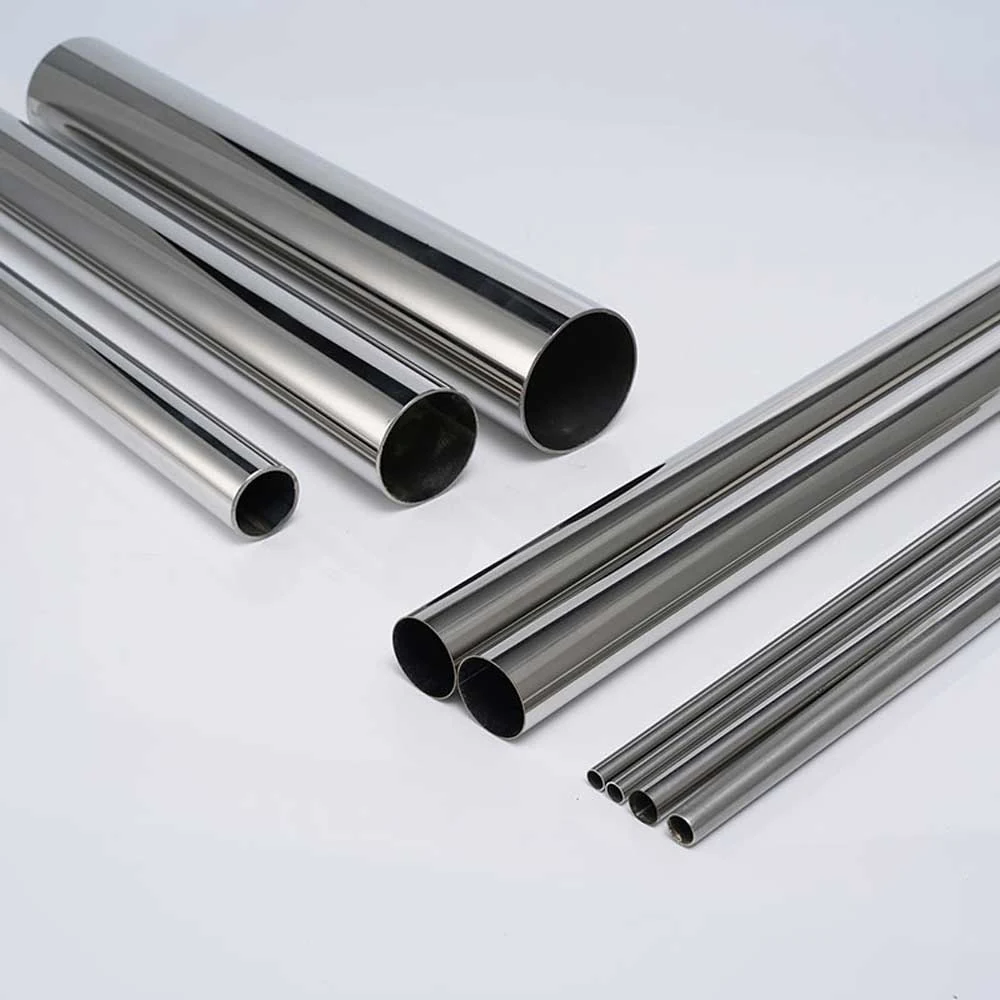
Handrail, railing, balustrade and staircase projects are good examples of why grade selection must be application-specific.
A buyer may need to consider:
- indoor or outdoor installation
- distance from the coast
- chloride exposure
- cleaning regime
- visible surface requirements
- welding locations
- fittings and assembly interfaces
- local project specifications
- required maintenance
The tube grade is only one part of the railing system.
Bends, welded joints, fittings, grinding, polishing and installation practices can all influence the appearance and performance of the finished assembly.
For this reason, a useful handrail tube RFQ should not simply say:
316L polished tube
It should define the tube dimensions, wall thickness, finish, fabrication route, fitting interfaces and relevant project acceptance requirements.
For visible architectural components, the agreed appearance reference may be just as important as the grade designation.
304 vs 316L for Bathroom Hardware
Bathroom hardware is another application where oversimplified grade rules can cause confusion.
Stainless steel tubes may be used for:
- towel bars
- grab bars
- shower components
- handles
- supports
- bathroom fittings
Moisture is obviously relevant, but buyers should also consider cleaning products, surface finish, ventilation, component design and how water or residue may remain on the finished product.
304 may be considered for many applications when the environment and product specification support it.
316L may be considered where the required corrosion resistance or exposure conditions are more demanding.
The correct decision should come from the product requirement—not from a generic statement that all bathroom products require one particular grade.
Does Surface Finish Change the 304 vs 316L Decision?
Surface finish and material grade should be considered together, but they are not substitutes for one another.
A polished stainless steel tube may provide the required visual appearance, but polishing does not turn 304 into 316L.
Likewise, selecting 316L does not eliminate the need to control the surface during manufacturing.
Visible stainless steel components can still be affected by:
- scratches
- handling marks
- welding discoloration
- grinding differences
- embedded contamination
- unsuitable storage
- poor surface protection
This is especially important for furniture, bathroom hardware and architectural products where the tube remains visible after assembly.
The material grade answers one part of the specification.
The surface requirement answers another.
Both should be defined before production.
How Does Grade Selection Affect Welding and Fabrication?
For many buyers, the stainless steel tube is not the finished product.
It may still need to be:
- cut
- drilled or punched
- bent
- welded
- polished
- formed
- inserted into fittings
- assembled into a frame or finished component
That means grade selection should be reviewed together with the complete downstream process.
316L’s lower carbon content is relevant to welded applications, but the final welding result also depends on factors such as joint design, heat input, tooling, fixture conditions, welding procedure and post-weld treatment.
Similarly, a grade designation alone does not establish that bending or forming will be successful.
Tube shape, dimensions, wall thickness, bend geometry, surface condition and tooling can all matter.
For manufacturing buyers, the safer approach is therefore to specify both the material and the next production steps.
Grade Selection Should Not Be Separated From Assembly Fit
A purchasing specification often focuses heavily on material grade while giving less attention to how the tube will fit into the final product.
In practice, assembly problems are frequently influenced by other requirements:
- outside diameter or profile dimensions
- wall thickness
- cut length
- end condition
- hole position
- bending geometry
- fitting dimensions
- surface protection
A correctly selected material grade cannot compensate for an incorrectly specified assembly interface.
For components that must slide into fittings, align with brackets, join a frame or match another manufactured part, the drawing and downstream assembly requirement should be reviewed together with the grade.
This is why a manufacturing-focused RFQ should describe how the tube will actually be used.
What Should Buyers Include in a 304 or 316L Stainless Steel Tube RFQ?
A useful RFQ gives the supplier enough information to understand both the tube and the finished application.
Include the material grade, but do not stop there.
A practical RFQ should normally define:
Application What will the tube become?
Service environment Indoor, outdoor, coastal, wet, exposed to cleaning chemicals or other relevant conditions.
Tube profile Round, square, rectangular, oval or special shaped.
Dimensions Outside diameter or profile dimensions and wall thickness.
Length Standard mill length or required cut length.
Tolerance requirements State project-specific dimensional or assembly requirements rather than assuming a universal tolerance.
Surface finish Brushed, polished or another agreed reference, including visible surfaces where relevant.
Fabrication sequence Cutting, bending, welding, drilling, punching, forming, polishing or assembly.
Assembly interfaces Fittings, connectors, inserts, brackets or other mating components.
Quantity Trial requirement and expected production volume where applicable.
Drawing or sample Especially important for custom profiles, bends, interfaces and appearance-sensitive components.
Acceptance criteria State the measurements, appearance references or project standards that will determine acceptance.
This information allows the material grade to be evaluated in context instead of in isolation.
How Vertex Tubes Approaches 304 and 316L Projects
Vertex Tubes can review manufacturing and architectural projects that specify grades such as 304 or 316L, subject to the project requirements.
Projects may involve round, square, rectangular, oval or special-shaped tubing, depending on the application and project review.
For manufacturing programs, tube requirements can be reviewed together with downstream processes such as cutting, bending, welding, end preparation, forming, polishing and assembly; the suitability and scope of these processes remain subject to project review and order confirmation.
The important point is that the final specification should be confirmed against the actual drawing, application and order requirements.
Vertex Tubes does not treat a material grade alone as a complete product specification.
For projects involving handrails, bathroom hardware, furniture, metal fabrication, machinery or other manufactured products, providing the intended use and downstream process helps establish a more useful technical discussion before quotation. The Resources hub provides additional manufacturing guidance.
304 vs 316L: A Practical Purchasing Decision
The most useful way to compare 304 and 316L stainless steel tubes is not to ask which grade is universally superior.
Instead, ask:
What will the tube become, where will it be used, what will it be exposed to, and how will it be processed before the finished product is complete?
304 is widely considered for many manufacturing and general-purpose applications.
316L may be considered when the project requires greater resistance to certain more demanding corrosion conditions, particularly where chloride exposure is relevant.
But the final grade selection should follow the buyer’s application, environment, drawings, fabrication route and acceptance criteria.
For manufacturers and architectural fabricators, a well-defined specification is more valuable than a simple grade comparison. Buyers can also use the manufacturing applications and Resources pages when preparing the project discussion.
Frequently Asked Questions
Is 316L stainless steel tube better than 304?
Not universally. 316L generally provides improved resistance in some more demanding corrosion environments, particularly where chlorides are relevant. Whether that advantage is necessary depends on the specific application and service environment.
Is 304 stainless steel suitable for outdoor use?
There is no universal indoor/outdoor rule. Suitability depends on exposure conditions, location, contaminants, maintenance, surface condition and project requirements. Outdoor applications should be evaluated according to the actual environment.
Should coastal handrails use 316L?
Coastal exposure is a reason to evaluate 316L, especially where chlorides are relevant, but the complete railing specification, finish, fabrication, installation and maintenance conditions should also be considered.
Does 316L remove all corrosion risk?
No. Stainless steel grade selection can improve corrosion resistance for appropriate environments, but the final result still depends on exposure, fabrication, surface condition, maintenance and project requirements.
Does polishing make 304 perform like 316L?
No. Surface finish and material grade are separate parts of the specification. A polished finish changes surface condition and appearance but does not change 304 into 316L.
Does 316L prevent welding problems?
No. The low-carbon composition of 316L is useful in welded applications, but welding quality still depends on the complete welding procedure, joint design, heat input, fixtures and post-weld treatment.
What information should I send when requesting 304 or 316L stainless steel tubes?
Send the application, service environment, grade, tube profile, dimensions, wall thickness, length, finish, fabrication steps, quantity, drawings and any project-specific acceptance requirements.
Request a Quote
If you are comparing 304 and 316L stainless steel tubes for a manufacturing or architectural project, send the tube profile, dimensions, wall thickness, finish, application, service environment, quantity and drawing where available.
The project can then be reviewed around the complete manufacturing and assembly requirement rather than the material grade alone.